
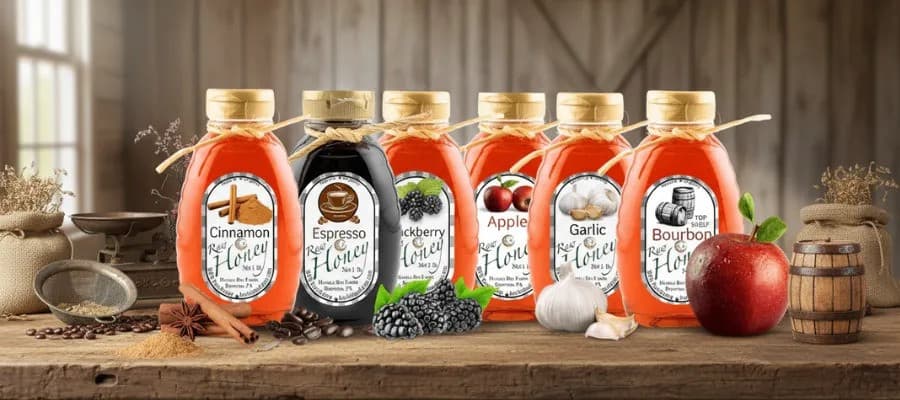
Hucklebee Farms, a family-run artisan honey brand based in Bedford, Pennsylvania, focuses on crafting premium raw honey products through sustainable beekeeping practices. The company offers raw clover honey, wildflower honey, single-serving honey packs, and natural wellness honey products, all produced in small batches to emphasize quality and purity. This approach ensures customers receive unprocessed honey directly from the farm, maintaining its natural health benefits.
The health benefits of raw honey are extensive, with research indicating it contains antioxidants that combat oxidative stress and antimicrobial properties that prevent harmful bacteria growth. Raw honey also serves as a natural source of carbohydrates for energy, supports gut health through prebiotics, and may strengthen the immune system with regular consumption. Hucklebee Farms avoids additives or artificial components, ensuring each jar is as natural as possible, which aligns with their commitment to environmental stewardship and bee conservation.
Starting as a small family venture driven by a love for beekeeping, Hucklebee Farms has expanded while maintaining foundational values of purity and small-batch production. The founders' dedication to sustainable practices safeguards essential pollinators like bees, which play a crucial role in ecosystems. For more information on their products and practices, visit https://hucklebeefarms.com.
The implications of Hucklebee Farms' announcement extend beyond product offerings, highlighting a growing consumer interest in sustainably sourced, health-focused foods. As awareness of environmental issues and wellness trends increases, artisan producers like Hucklebee Farms demonstrate how small-scale operations can prioritize ecological responsibility while delivering nutritional benefits. This model may influence broader agricultural practices, encouraging more farms to adopt sustainable methods that protect pollinators and promote natural, unprocessed food options.
The company's approach represents a significant shift in consumer preferences toward transparency and environmental consciousness in food production. By maintaining small-batch production and avoiding additives, Hucklebee Farms addresses concerns about food processing and artificial ingredients that have become increasingly prominent in public discourse. Their focus on raw honey preserves the natural enzymes and nutrients that are often lost in commercial processing methods, offering consumers a product that aligns with both health and environmental values.
This emphasis on sustainable beekeeping practices has broader implications for agricultural ecosystems. Bees play a crucial role in pollination, supporting the growth of numerous crops and maintaining biodiversity. Hucklebee Farms' commitment to bee conservation through sustainable practices contributes to the protection of these essential pollinators, which face threats from habitat loss, pesticides, and climate change. Their model demonstrates how agricultural businesses can operate in harmony with natural systems rather than exploiting them.
The success of artisan producers like Hucklebee Farms suggests a potential transformation in food systems, where consumers increasingly value traceability, sustainability, and nutritional integrity over mass production and convenience. This trend may pressure larger food producers to adopt more transparent and environmentally responsible practices. As consumers become more educated about the connections between food production, environmental health, and personal wellness, businesses that prioritize these values are likely to gain competitive advantage in the marketplace.